Join our mailing list and receive invitations to our events and updates on our research in your inbox.

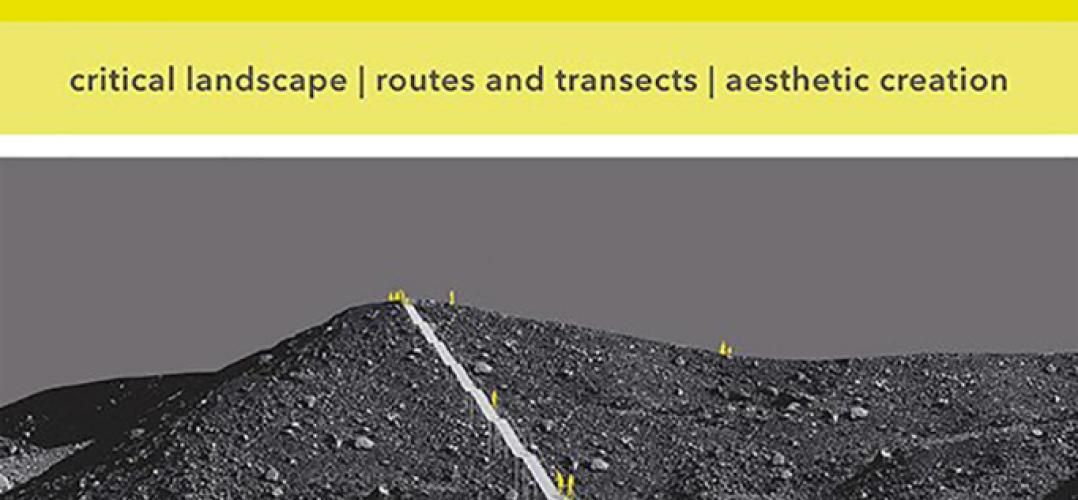
This paper summarizes an urban and regional planning case study concerning urban growth in relation to biodiversity in the city of Bogotá, Colombia. The case study is the third phase of an ongoing research project_the Hotspot Cities Project_at the McHarg Center for Urbanism and Ecology at the University of Pennsylvania.
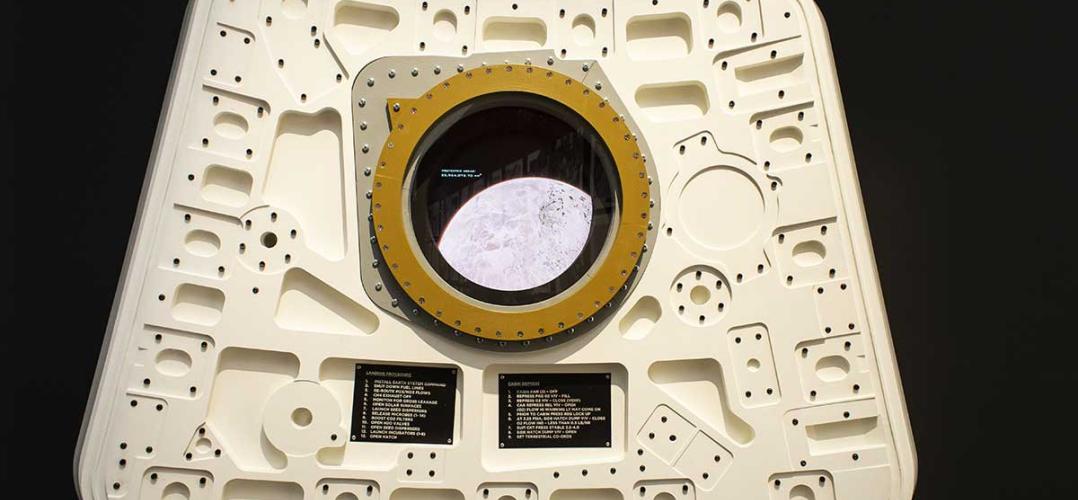
Architecture must stop thinking just in terms of providing shelter to humans: «animal, plants and the environment should be your clients just as well.» The first artwork of the Australian landscape architect Richard Weller, titled Not the Blue Marble, is an exact one-to-one replica of the one of the doors of the Apollo XXI seen from the inside. Not the one which led the astronauts on the moon, but the one they had to open to get back on Earth: «the reason why this is the main symbol of the artwork is that, as French philosopher Bruno Latour claims, the thing to do now is coming back to Earth, and it’s a difficult thing». Part of the solution to make our planet greener would be stopping exploring Space to find answers on how to build our future and return to focus on Earth. In a metaphorical way this is what the Apollo XXI door stands for. There’s more to that though: inside the door window is a simulation of the Earth, «it could be a long way in the future, when the planet has dehydrated: it’s a climate-changed planet». The artwork invites viewers to «imagine going back to the Earth that’s in the picture, sometime in the future, when the ecosystem is no longer inhabitable». In the Earth portrayed, which is mostly white to symbolize dryland, there are still some bits of green: those are the existing environmentally protected areas, «places where life could regenerate and start again». Needless to say, these are way too few. «On the door is a set of instruction» on the same spot where they were on the original door, but the text is changed: the new instructions are advice on «how you might go back to this new world and start to cultivate it». The first artwork also serves as a tool to build an imagery to read the two following pieces. Not the Blue Moon sheds light on the projects currently in place to protect areas of our planet and underlines that this is not enough. We need to build more and above all connect them.
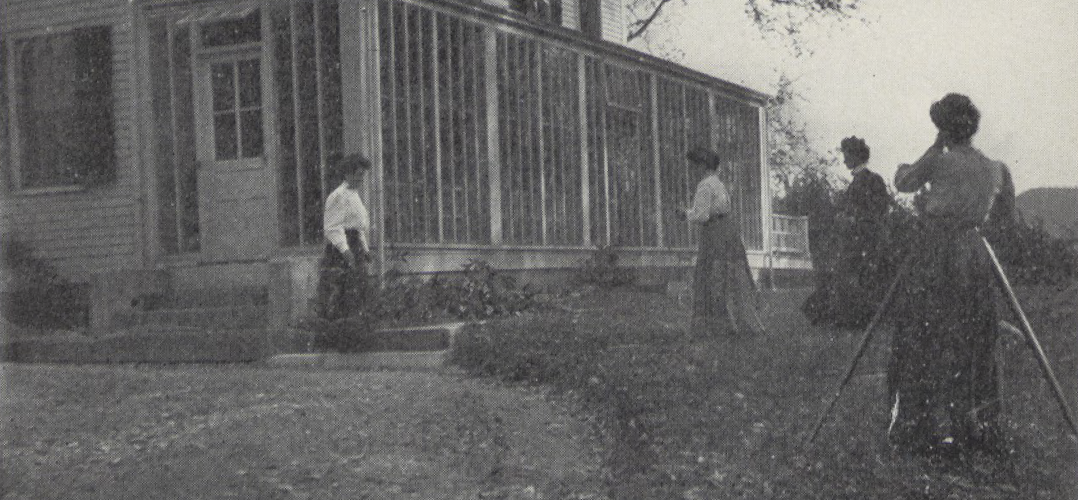
The McHarg Center has welcomed a new research project that is exploring the history of Landscape Architectural Education in the United States. Weitzman Associate Professor in Landscape Architecture, Sonja Dümpelmann, is heading this project. The evolution of landscape architecture as a modern profession since the late nineteenth century is closely linked to the development of landscape architecture as a discipline in professional schools of higher education. Today’s character of professional practice, the gender distribution and lack of BIPOC students, faculty, and professionals in the field, are closely linked to historic events, the history of the profession and its development as a discipline. This project explores these connections and the evolution of landscape architectural education in the United States. Knowledge and explanations of this past can contribute to addressing current inequities.

This collection of design ideas was generated through an open call to translate the core goals of the Green New Deal—decarbonization, justice, and jobs—into design and planning projects with regional and local specificity. Between August 2020 and June 2021, over 50 groups, over 100 individuals, and 170 university courses representing 90 universities participated in the Green New Deal Superstudio. A complete archive of their submissions is available here. The Green New Deal Superstudio was a joint effort led by the Landscape Architecture Foundation in association with the Weitzman School of Design McHarg Center, the Center for Resilient Cities and Landscapes, the American Society of Landscape Architects (ASLA), and the Council of Educators in Landscape Architecture (CELA).