Perspectives

President's Commission reviewing maps of Three Mile Island
PERSPECTIVES 02: Toward a Toxic-Free Future
To support capacity building in community-led environmental right-to-know research, Assistant Professor Jessica Varner and her graduate student researchers worked alongside community members to develop resources that improve navigation of state laws under the Freedom of Information Act (FOIA). The work is now a publicly available digital resource housed in A People’s EPA (APE), as part of the “Community-Led FOIA" project. The website is dedicated to explaining the nuanced histories of the U.S. Environmental Protection Agency and clarifying its operations and inner workings. APE is affiliated with the Environmental Data & Governance Initiative, a research collaborative advancing environmental right-to-know research that serves as a watchdog organization tracking changes in access to federal environmental information.

Research assistant Bianca LaPaz (MLA ’27) spoke with Dr. Jessica Varner about her role in A People's EPA, the Community-Led FOIA project, and the broader research interests that inform her work, including the long development of synthetic chemicals in U.S. and German corporations, toxicity in the built environment, the importance of public histories, and related environmental justice efforts.
Read More
The Chisos Mountains
PERSPECTIVES 02: CIRCLE
CIRCLE is a group of landscape designers, educators, and scholars who advocate for greater inclusion of Indigenous voices in environmental design and planning. Their collaborative work includes the discussion series “Designing For, By and With: Indigenous Voices of the Land,” hosted by the University of Pennsylvania’s McHarg Center for Urbanism and Ecology and the Department of Landscape Architecture at the California State Polytechnic University, Pomona. This series, held from January to April 2026, brought together eleven speakers from across North America to discuss their work within Indigenous communities. The multi-time-zone, cross-border collaboration held four panels, including “Sovereignty in Design,” “Designing For and From Community,” “Sacred Sites, Storytelling and Memory in Place,” and “Education, Institutions, and the Path Forward.”

CIRCLE was founded by Desiree Martinez, a member of the Gabrielino (Tongva) community and Tribal Relations and NAGPRA/CalNAGPRA Director at Cal Poly Pomona; Muriel Fernandez, a faculty member of the Department of Landscape Architecture at Cal Poly Pomona; Tera Johnson, dual MLA + MCP from University of California, Berkeley now working at the California Botanic Garden; and Dagny Elise Carlsson, a Penn dual-degree MLA / MArch student and a citizen of the Cherokee Nation and Shawnee Tribe.

Rather than a traditional interview, the group conducted a roundtable discussion following the format of their regular meetings. CIRCLE has always functioned in a non-hierarchical, collaborative manner, and thus the roundtable consists of discussion questions intended to encourage reflection on CIRCLE’s collaborative process. Topics included the speaker series, their collective goals, and their hopes for how these discussions might influence design practice more broadly.
Read More
CAPR card deck
PERSPECTIVES 01: Constructing the American Public Realm
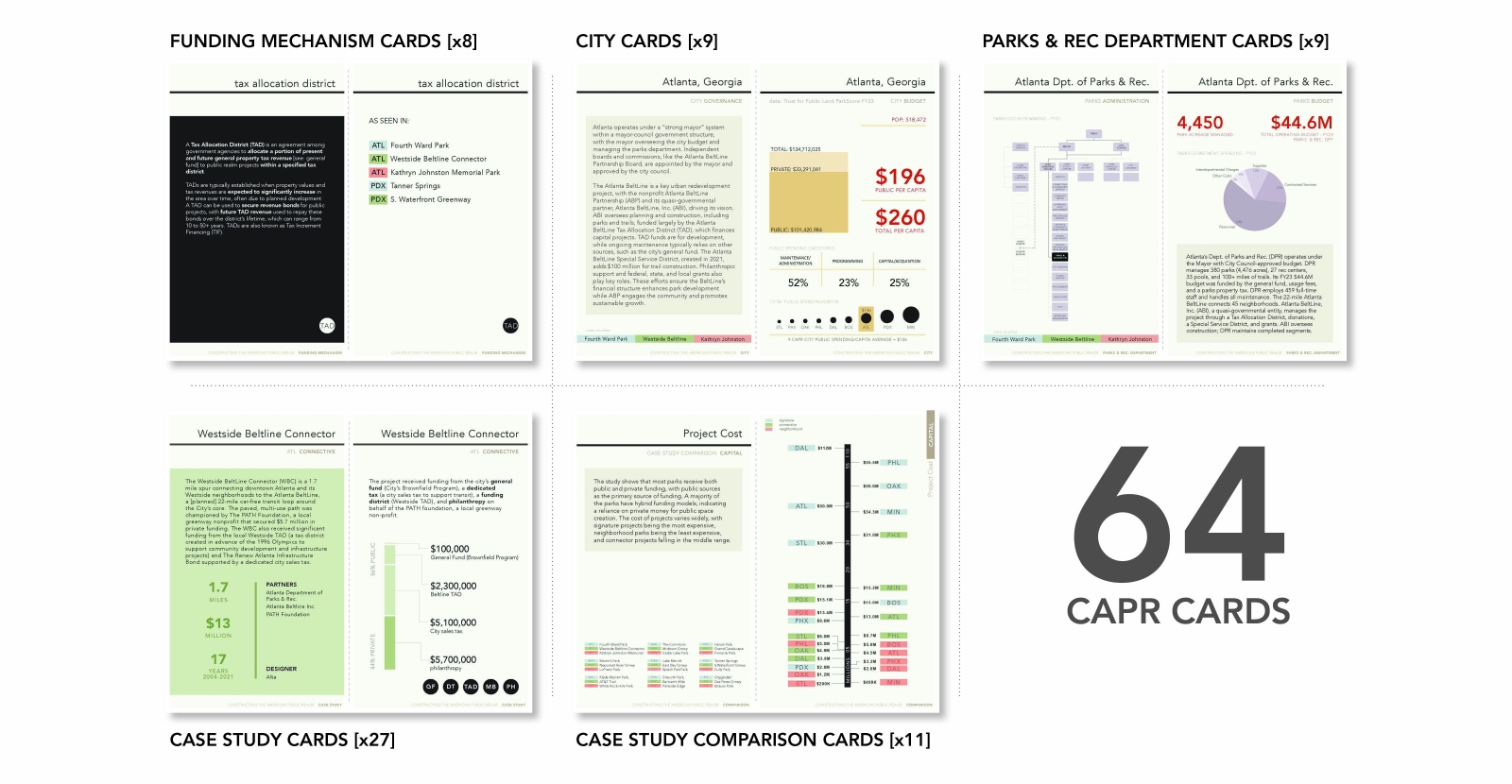
The research project “Constructing the American Public Realm” (CAPR), initiated by Christopher Marcinkoski at the McHarg Center and in ongoing collaboration with the team at PORT Urbanism, examines how Public space is conceived, funded, built, and administrated across nine American cities. CAPR focuses on capital structures and governance models, creating a framework to compare municipal strategies on creating and operating public space, revealing idiosyncrasies in how these processes and investments are deployed. This research led to the creation of a 64-card Public Space Funding Primer—a tool designed to distil complex funding models, governance structures, and investment mechanisms into an accessible format so that people can better understand how public space is made and managed. The cards allow designers, policymakers, and community members to ask “How did other cities get these projects done? How are they paying for this work and structuring projects for long-term success?” CAPR aims to better support advocacy and informed decision-making around the public realm, both in and beyond the design profession.

CAPR has been made publicly accessible through PORT’s design practice and has been presented to professional associations that focus on the built environment and public realm including the National Mayors’ Institute on City Design, the National Recreation and Park Association, the American Institute of Architects, and the American Society of Landscape Architects.

Christopher Marcinkoski sat down with his research assistant and PORT collaborator Lillia Schmidt (MLA ‘25) to discuss this ongoing work.
Read More
Tropical Plants
PERSPECTIVES 01: Adventive America
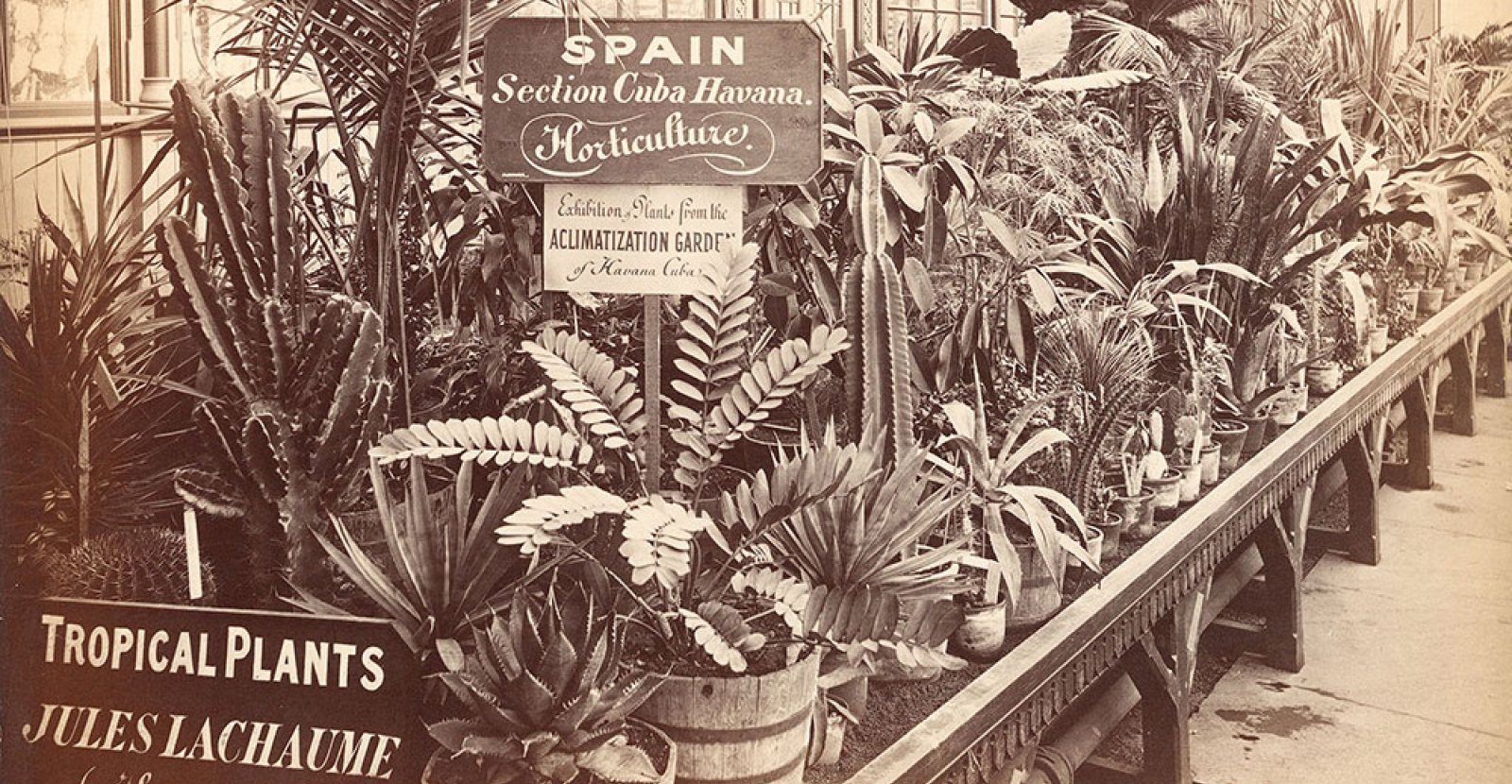
In advance of the 2026 semiquincentennial of the United States, marking the 250 years since the signing of the Declaration of Independence in Philadelphia in 1776, graduate student researchers have been assisting Catherine Seavitt, Meyerson Professor and Chair of the Department of Landscape Architecture, with a McHarg Center project entitled “Adventive America.” The project explores the narratives of the botanical exchanges of the early republic, acknowledges the agency of plants at both the 1876 Centennial Exposition and along the Delaware River’s wasteland shores, and invokes the critical spirit of the grassroots People’s Bicentennial Commission of 1976. The Centennial Exposition, held at Fairmount Park during the aftermath of the Civil War, reveals fascinating threads of international relations and exchange, the global movement of plant materials, and the role of plants in the economic and industrial history of the United States. With the upcoming 250th anniversary in Philadelphia, this project uses a nontraditional lens to think critically about the making of a nation.

Research assistant Elizabeth VanDerwerken (MLA, MCP ’26) spoke with Catherine Seavitt about the ongoing Adventive America project as well as the broader research interests that inform her work.
Read More

Footnotes