Join our mailing list and receive invitations to our events and updates on our research in your inbox.

To support capacity building in community-led environmental right-to-know research, Assistant Professor Jessica Varner and her graduate student researchers worked alongside community members to develop resources that improve navigation of state laws under the Freedom of Information Act (FOIA). The work is now a publicly available digital resource housed in A People’s EPA (APE), as part of the “Community-Led FOIA" project. The website is dedicated to explaining the nuanced histories of the U.S. Environmental Protection Agency and clarifying its operations and inner workings. APE is affiliated with the Environmental Data & Governance Initiative, a research collaborative advancing environmental right-to-know research that serves as a watchdog organization tracking changes in access to federal environmental information.
Research assistant Bianca LaPaz (MLA ’27) spoke with Dr. Jessica Varner about her role in A People's EPA, the Community-Led FOIA project, and the broader research interests that inform her work, including the long development of synthetic chemicals in U.S. and German corporations, toxicity in the built environment, the importance of public histories, and related environmental justice efforts.
Bianca LaPaz (BL) Could you introduce yourself, including your background before your time at Penn?
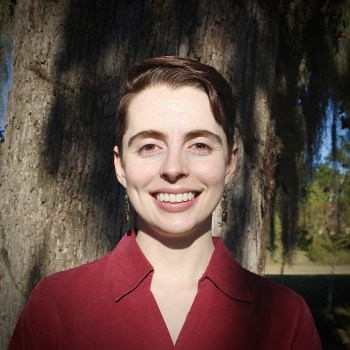
Jessica Varner (JV) I’m Jessica Varner, an assistant professor in the Department of Landscape Architecture. I came to Penn after practicing architecture in Los Angeles at Michael Maltzan Architecture. I worked primarily within the non-profit sector, including projects in downtown Los Angeles in no-income housing, and public-facing projects such as remediation sites, mixed-use parks, and work on the Los Angeles River. At that time, I began teaching and writing.
After a career start in Los Angeles, I went back to school for my second master’s degree at Yale, focused on the intersections of the built environment and environmental history. I went back to school because I had a deep curiosity for larger structural questions, which I felt like design didn’t always have the answers for. After that, I completed a PhD at MIT, with a focus on environmental history, material culture, art history, and architectural history. MIT was an experimental place, a place where you could work across the disciplines in the humanities, while being in conversation with the sciences and engineering.
BL How have your past research interests led you to where you are now?
When I started that research at MIT, I was interested in long-term, large-scale questions about toxicity in the built environment: why regulations in the U.S. are so relaxed, why the profession doesn't talk much about key environmental issues, such as silicosis (a pulmonary fibrosis lung disease, caused by scarring in the lungs due to occupational exposure to silica dust, according to the American Lung Association) or sick building syndrome (acute health impacts to building occupants, with no specific cause or identifiable illness, according to the U.S. Environmental Protection Agency), why we fill our buildings with plastics and synthetic chemicals, and why we don't learn much about how materials in buildings (plasticizers, paints, grouts filled with resins, and more) affect our health. Incredible scholars like M. Murphy in the history of science, Vanessa Agard-Jones in anthropology, or Ellen Spears in environmental history, opened the door for me to think through questions around the chemical turn in the 19th and 20th centuries. Those questions form the basis of a book that I'm currently finishing, called Chemical Desires: When Modern Design Met the Chemical Industry, looking at a century of synthetic chemical development, when chemical corporations turned to building and construction materials for growth.
This is a moment when urban, domestic, commercial, and suburban design all turned to synthetic chemicals to make the worlds around us.
That research and a background in design led me to the Department of Landscape Architecture at Penn, at a moment when landscape architecture is asked to do so much. As a historian focused on environmental history and the built environment, I believe that training landscape architects today requires you learn and teach across disciplines—the history of science, the history of ecology, the history of the environment, the history of large-scale system thinking, the history of design, the history of migration of peoples, Indigenous histories, and histories of conflict—all those things encompass our understanding of landscapes today. As a 19th and 20th-century historian, I came to Penn truly bringing those different modes of inquiry within my work to landscape architects, cultural landscape practitioners, historians, urban planners, writers, and landscape thinkers. It’s been interesting to find connections between my prior research and teaching here in Philadelphia and realize just how strong those connections are.
BL What connections have you discovered between your research and the built environment?
JV My work extends two concepts throughout the 19th and 20th centuries: chemical modernity and chemical modernisms. Chemical modernity describes the acceptance and expectation of synthetic chemicals in modern industrialization, while chemical modernism describes the aesthetic and cultural reaction that took root in the development of synthetic chemicals. As synthetic chemicals were developed, produced, combined, and compounded, they were sold to an audience via ideas in aesthetic modernism, or what things looked like and how they performed.
For example, PCBs or polychlorinated biphenyls are one of the chemical compounds that I research. Monsanto has produced over 99% of PCBs since 1901, which were designed around a modern idea of fireproofing; when building materials are coated with PCBs or soaked in PCBs (as is the case in electrical transformers), it increases their fireproof nature. In the early 20th century when the U.S. was first standardizing building codes, PCBs were written into fire and safety codes, requiring their use. Yet we don't need PCBs; in fact, like other synthetic chemical compounds, they are derived from waste materials in coal, oil, and gas production. Before PCBs' invention, fireproofing was achieved in other ways, but Monsanto Chemical made PCBs ubiquitous by working with underwriters for insurance companies and building code developers. The proposal was made in 1976 for them to be banned at the federal level, and they were finally banned in 1979. The memos in Monsanto’s notes state that it was almost impossible to find a replacement for PCBs.
I question the long process of synthetic chemicals becoming ubiquitous and desired, because of their performance qualities or their aesthetic nature, like plastics or dyes, or because they mitigate certain conditions of risk like fire, and ask why? Who made the system of a built environment filled with synthetic chemicals, which originally didn't exist, over the course of a century—the chemical century—such that we can't imagine life without them?
BL How can we push the field of landscape architecture to engage more with synthetic chemicals—which are currently accepted as a part of the profession—to move toward a toxic-free future? Is there a specific connection between landscape architecture and chemical modernity?
JV So many connections. Over time, these compounds have also become ubiquitous in the field of landscape architecture. This is illustrated by the prevalence of Geofoam/Geofill, made of polystyrene from Dow Chemicals. Polystyrene is used in many ways, in building insulation, plastics, and interiors, but also in infrastructure projects, like roadways, where geofill is used to supplement and support heavy soil.
Geofill is standard practice nowadays in landscape construction, but it’s also a substance being put in the ground. What happens to that geofill in one hundred years? Environmental historians and landscape practitioners know that materials break down over time. They leach. The components then move into soils and waterways. What does this mean when, scientifically, the material is known to be carcinogenic, but is accepted and approved for building material use and construction? By thinking about materials through the longer chemical century, we can, in turn, think deeper about these status quo choices and work to make changes
Another example is plastics and their reuse in the public realm. Plastics and their recyclability have long been contested by policymakers, historians, environmental justice leaders, and even the plastics industry. Of all the plastics that we say are recyclable, only around 9% are recycled. First, we're producing way too many plastics. But then, plastics are essentially proprietary blends of chemicals of unknown harm that we are reusing. When I say proprietary, I mean that what makes up plastic compounds is not easily known because of intellectual property law in the U.S. When using a recycled plastic product in landscape design, such as for recycled plastics playgrounds or for turf, you can never really know what's inside that plastic entity. In this, substances and compounds like PFAS are often within plastics, along with other harmful additives. In many instances, you may think it's recycled, but at the same time, there is a layer of greenwashing to label certain materials as "sustainable."
Many disability-focused scholars have correctly pointed out that not all plastics are bad. Some are needed. Certain plastics are essential because some people need them in life-saving devices, but when we think about the built environment, we use them at very large scales, that can affect ecosystems, watersheds, and people. Reconsidering their use (and the use of any material at scale) is important for the field and for material histories overall. Alternatives exist to move away from synthetic chemicals that have been accepted as part of the profession and move toward a toxic-free future.
As a historian, I’m not a solutions maker. Rather, I work to understand the structural, deeply embedded historical issues that got us here, and leave it up to landscape designers and others like you, who then have the critical knowledge to figure out how to design a better future.
BL What do you know about the history of Environmental Justice movements and the legacies of contamination and toxicity in Philadelphia?
JV I'm just starting to learn those histories. Historians and friends like Jared Farmer introduced me to how important oil development was here. I knew that legacy contaminants in synthetic chemicals are in the landscape— in the soil, water, and air. There are several important Superfund sites along the Delaware. I knew chemical companies once held profound influence over the city; it is literally written in the urban fabric. For example, there are early plastics companies with beautiful headquarters buildings here, like the Rohm & Haas building, adjacent to Old City. There are parks and gardens under legacy ownership or patronage from DuPont and others. But I am just learning about chemical histories in Philadelphia, and there are so many groups working on these issues here. I want to point out those folks who have been putting in the work for decades—the Clean Air Council, Philly Thrive, the Philadelphia Climate Justice Collective, just to name a few.
With a background in non-profit work spanning over fifteen years, I knew that I could never be a historian who just wrote single-author histories about synthetic chemicals. I have always tried to find ways to make sure that the work reached a broader audience, find ways to work with folks working to make change, and collaborate to build coalitions working towards a toxic-free future for all, or a world without synthetic chemicals.
JV Since 2019, I have worked with and helped steer the Environmental Data & Governance Initiative (EDGI). As I was finishing my dissertation in 2019, I started co-curating with my colleague, Leif Fredrickson, on a project called A People's EPA (or APE). That project, under the umbrella of EDGI, allowed me to work with other folks in anti-toxics coalitions and push how environmental history can inform public histories, but also policies around toxics. We write public comments, work with local and federal legislators to understand how synthetic chemical issues are structural, offer technical assistance across a wide range of research questions (like FOIA-ing), and more. I feel lucky to be in collaboration with folks in EDGI and across our community partnerships who have also done this work for decades. As a researcher, I’m just adding to the capacity and the voices of others who have done so much more work before me.
BL Working with you and fellow research assistant Amy Xu last summer to develop 50-state FOIA guides opened my eyes to both the consistency and variations of governmental transparency laws from state to state. For example, response times and the availability of FOI hotline assistance are not consistent across the board. Who do you hope to impact with your FOIA-informed research into environmental transparency or environmental right-to-know research?
FOIA can give you more information about either a place you're living in, or a place you're interested in, or more. It is a powerful tool that allows folks to know more about environmental decision-making.
JV FOIA, or the Freedom of Information Act, is a powerful bedrock law in the U.S., which allows anyone to request records from government agencies as part of an inquiry into government process. If a government official had a meeting, and you wanted to know more about it, or if you wanted to better understand how a decision was made, you could request those documents through the FOIA process. In bureaucratic agencies like the Environmental Protection Agency (EPA), it is difficult to understand fully why certain legal protections are allowed for wetlands, certain chemicals are banned, or certain Superfund site decisions are made.
With my collaborators at EDGI, we started the community-led FOIA project alongside trusted community partners. In that partnership, we wrote requests to specific agencies like the Army Corps of Engineers or the Department of Environmental Conservation and gathered over 90,000 pages of documents to help answer specific questions about Superfund designations and more.
FOIA can be an incredible tool to get answers. In a perfect world, environmental information and environmental data would be transparent and accessible to all. FOIA is not perfect, but it is a right to public information. The Community-Led FOIA project was developed to help build capacity around environmental right-to-know procedures, like FOIA.
BL Prior to working on the Community-Led FOIA project, I presumed the FOIA process was only used in rare circumstances under special conditions. I have a better understanding now of the range of scenarios in which community members can use FOIA to gather information. Are there any misconceptions about FOIA that you would like to dispel through your work?
JV Like synthetic chemicals, FOIA seems incredibly technical and difficult to access or participate in. We created the FOIA state-by-state guides (credit to you, Bianca, and Amy Xu, my incredible research assistants, and collaborators at EDGI, including Izzy, Rachel, and Gretchen, among others) to show that it's quite easy to ask an agency a question that might not be easily discovered through what is available online. FOIA and public comment periods are written into state and federal law so that everyone can participate in larger conversations and work together in the environmental right-to-know movement.
BL How would you define public histories, and why are they worth cultivating?
JV What's important to understand about history is whether history is written for an academic audience, mainly historiography (or the history of history), or written for a broader audience. Public history is defined by how you share it and to what audience. In the field of landscape architecture, landscape studies, and cultural landscapes, public histories raise deeper questions about whose history we share, what history gets told, and why? Legible, interesting, and exciting history matters. Because I work on topics of synthetic chemicals, environmental degradation, and human health, I can't imagine writing histories about those things that are only meant for an academic audience.
Take, for example, the history of Teflon and PFAS within paint. It is important to think about the history of chemical development across all places—in academia, corporate history, global history, and in environmental history writ large. Teflon and PFAS are so prolific in waterways and residues within soil, and in products in your home. The effects of PFAS, which were invented in 1941, are just now coming to light—how harmful they are and how ubiquitous they are. At the last count, there are over 6,000 PFAS compound formulas.
Through op-eds, anti-toxics coalition work, and more, other historians and I are finding ways to tell the story of why these compounds and substances matter, and how they affect human health and ecosystem health. For me, public history doesn't gatekeep; these are histories that everyone should know.
BL What kind of research questions will you be exploring in the future?
JV My next project looks at neurotoxics in materials—metals, glazes, plastics, etc.—and other factors that contribute to intergenerational harm. Neurotoxics affect brain systems and are carried in DNA, often in uneven ways in uneven places. Lead is the most common example, causing debilitating learning issues and developmental delays, which are passed through intergenerationally. It's something I am just starting on, but just as scholars like Harriet Washington have explored, and places like the legacy of Flint demonstrate, I believe neurotoxics are key to understanding the next chemical century to come.
BL Considering your background and upbringing, the experiences you’ve had, and the perspectives you’ve formed through your work, what drives your interest in this research when these topics are so persistent and at times can be considered hopeless?
JV A commitment to theories of change in this work is important to me, and that’s why I consistently toggle between teaching, researching, and non-profit coalition building. I didn’t think my upbringing in a farming family in rural Nebraska ever connected directly to my research questions. That changed when I started researching building materials and learned that the large synthetic chemical corporations that were producing pesticides, like Monsanto, were then the same ones producing PCBs. I realized that these connections all come down to the fact that synthetic chemicals all come from the same places, meaning they’re all from petrochemicals, like coal, oil, and gas derivatives. The pesticides that hold together the framework of farming in Nebraska are the same chemicals that hold together the construction industry, and the same chemicals that hold together geofill in landscape architecture. These things are interrelated, part of one larger system, and that connection is why it matters to me and why I continue to work to change the chemical system. Toxic-free futures for all is a lofty goal, but what gives me hope is that so many amazing folks are working together for change.
BL I can’t imagine what it’s like to come from a rural background, but I can imagine how your worldview has grown. It’s powerful to see where you come from, and how these connections and relevance to the world-at-large transcend a specific point on the map but cover the Earth. Was there anything you wanted to talk about that we haven’t addressed yet?
JV None of these questions and none of this work can be done alone. At the McHarg Center and the Department of Landscape Architecture at the University of Pennsylvania, I am incredibly fortunate to work with and collaborate alongside such amazing folks, to get the opportunity to work across disciplines, and mentor students. I think about how we can all work together a little better, in community, developing reciprocal relationships and becoming colleagues. It’s my favorite part of the work.
BL I feel very lucky we’ve been able to work together to develop as colleagues and further your research. And all the students in our program that you reach in your History/Theory classes, even if you’re with them for only a couple of semesters, what you teach is consciously constructed and curated and leaves us different than when we came in.
This interview was conducted for Perspectives 02 and has been edited and condensed for clarity.